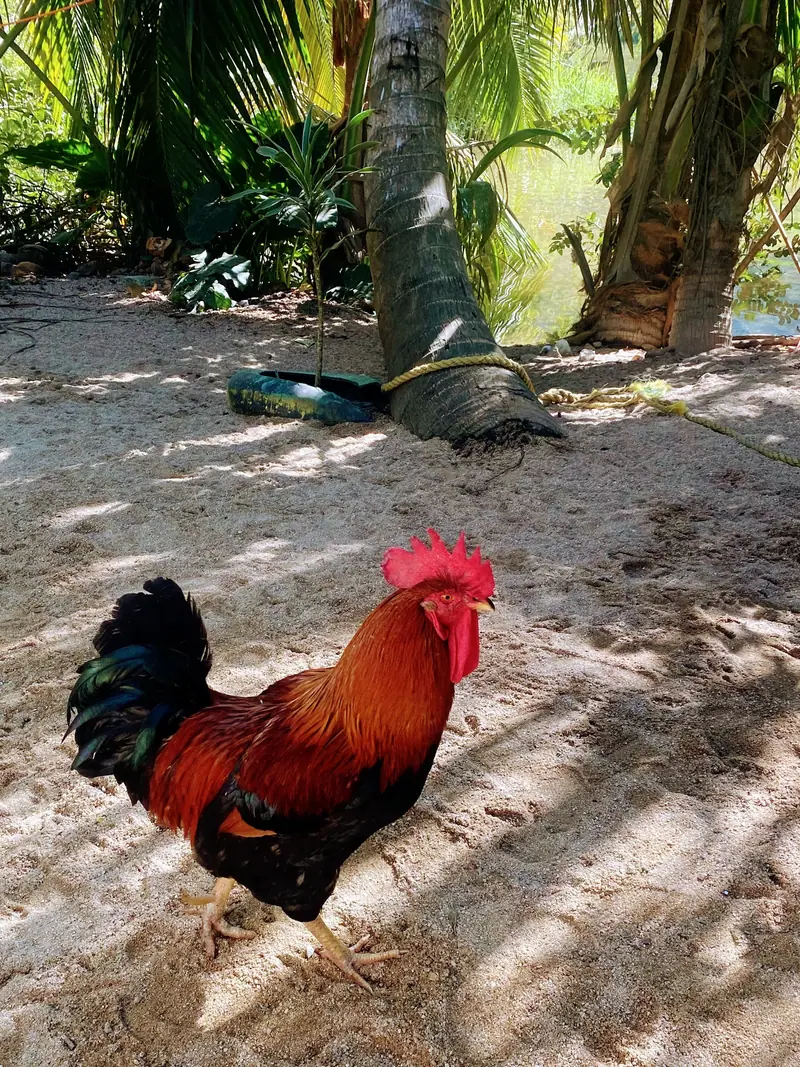
In Yelapa you'll hear chachalacas in the trees, watch frigatebirds and pelicans over the bay, find iguanas on sunny rocks, and, in winter, see humpback whales offshore. Almost all of it is harmless and fun to spot, and the few animals that call for care are easy to live with once you know a couple of simple habits.
iNaturalist observers have logged nearly 1,300 species in and around Yelapa, including more than 100 kinds of birds. The tables below group the ones you're most likely to meet. Type a word in the search box to filter them all at once.
What birds will you see and hear in Yelapa?
Birds are the easiest wildlife to enjoy here, right from the terrace with your morning coffee: chachalacas chatter in the trees, frigatebirds and pelicans ride the wind over the bay, and herons work the river mouth. Our birds of Yelapa guide covers 60 species with Spanish names, photos, and where and when to find them, so this page sticks to the other animals.
What animals live around the village and jungle?
Most mammals here are shy, and many come out at night. Enjoy them from a distance and don't feed or handle them: the CDC notes that bats, coatis, foxes, and skunks can carry rabies in Mexico, though the country is free of dog-maintained rabies.
| Animal (English) | Spanish name | What it looks like | Where and when you'll see it | Good to know |
|---|---|---|---|---|
| White-nosed coati | Tejón, coatí | Long tail and long, pointed nose; about 110 cm from nose to tail tip, half of it tail | Jungle edges and trees, by day | Females travel in groups called bands. |
| Raccoon | Mapache | Grayish, medium-sized mammal with a masked face | Around houses at night | Mexican raccoons travel in groups and are harmless, but they take any food left out. |
| Virginia opossum | Tlacuache | Marsupial about the size of a house cat | Paths and gardens at night | A quiet nighttime visitor. |
| Collie's squirrel | Ardilla gris del Pacífico | Gray tree squirrel | Trees, by day; the most logged mammal in Yelapa | Found only in Mexico. |
| Bats | Murciélago | Small, fast fliers at dusk | Over gardens and trees at dusk | Some sip nectar, some eat fruit. Never pick one up. |
| Local dogs | Perro | Village dogs of every size | Beach, paths, and restaurants | Friendly and not lost. |
| Mules and horses | Mula, caballo | Working animals carrying loads or riders | Village paths and the waterfall trails | With no cars, mules carry the goods. Step aside and let them pass. |
Which reptiles and frogs live in Yelapa?
Lizards bask in the sun, and frogs take over on damp nights.
| Animal (English) | Spanish name | What it looks like | Where and when you'll see it | Good to know |
|---|---|---|---|---|
| Green iguana | Iguana verde | Large green to grayish lizard with spines down the back and a big throat flap; adults usually 1.2 to 1.7 meters long, mostly tail | Trees and sunny rocks, all year; the most logged reptile in Yelapa | Mostly eats plants. Give it space; the tail can swat. |
| Western spiny-tailed iguana | Iguana de cola espinosa, garrobo | Gray to brownish-black, with a crest of spines and a tail ringed with spiky scales; up to 1.3 meters; the young are bright green | Rock walls, paths, and sunny ledges | Found only in western Mexico. |
| Brown basilisk | Toloque rayado | Brown lizard with a pale stripe from eye to hind leg; males up to 61 cm with a crest | Along the river | When startled it can run across the water on its hind legs. |
| Geckos | Cuija, besucona, salamanquesa | Small, pale lizards with big eyes and sticky toes | House walls and lights, at night | Harmless. They come out at night to eat bugs. |
| Giant toad | Sapo gigante | Big, warty, brown toad | Paths and gardens on damp nights | Admire it without picking it up. |
| Mexican giant tree frog (leaf frog) | Ranita verduzca | Bright green frog with white spots, a white belly, orange legs, and golden eyes; up to 10 cm | Near water at night; most Yelapa records fall from May to September | The most logged frog in Yelapa. |
| Pacific coast parrot snake | Culebra perico del Pacífico | Slender green snake | Bushes and trees | The snake logged most in Yelapa. Leave it be. |
| Mexican west coast boa | Mazacuata, boa | Heavy-bodied patterned snake; Yelapa records range from young ones near 40 cm to adults over 1.5 meters | Jungle and gardens; most Yelapa records fall in August and September | Not venomous. Leave it be. |
What sea life can you see in the bay?
Banderas Bay is deep and rich: Mongabay reports depths of 300 to 500 meters close to the coast. For whales, read our whale season guide. For swimming spots, see Yelapa beaches, swimming, and tides.
| Animal (English) | Spanish name | What it looks like | Where and when you'll see it | Good to know |
|---|---|---|---|---|
| Humpback whale | Ballena jorobada | Huge dark whale; look for the spout, a curved back, and the tail flukes | Banderas Bay, November to April | The bay is a breeding and calving ground. |
| Dolphins | Delfín mular, delfín tornillo, delfín moteado | Gray dolphins in groups | Open water of the bay | Bottlenose, spinner, pantropical spotted, and rough-toothed dolphins all live in the bay. |
| Oceanic manta ray | Manta voladora, mantarraya | Giant ray up to 7 meters from wingtip to wingtip | The bay off Yelapa | They feed on plankton. Researchers working from Yelapa have identified nearly 500 mantas in the bay. |
| Olive ridley sea turtle | Tortuga golfina | Sea turtle with an olive-colored shell | Nests on beaches around Puerto Vallarta from August to December | Hatchling releases happen at sunset. Keep 10 meters from a nesting turtle, with no white lights or flash. |
| Sally Lightfoot crab | Cangrejo corredor | Flat crab about 8 cm across; young ones black, adults mottled red, brown, pink, or yellow | Wave-splashed rocks at the ends of the beach | Very fast and able to leap. |
| Guineafowl puffer | Botete | Round fish covered in small white spots | Rocks at either end of the cove, while snorkeling | The fish logged most often in Yelapa. |
| Orca | Orca | Black-and-white whale with a tall dorsal fin | Rare; a 2023 record in open water very near Yelapa | Killer whales live in the region year-round; a sighting is a treat. |
What bugs and spiders will you meet in Yelapa?
Insects make up more than half of all the species logged in Yelapa, and most are beautiful or busy.
| Animal (English) | Spanish name | What it looks like | Where and when you'll see it | Good to know |
|---|---|---|---|---|
| Fireflies | Luciérnagas | Small beetles that flash soft lights | Gardens at night; Yelapa records peak in December and January, and again in July and August | A lovely sight after dark. |
| Giant cicada | Chicharra gigante | Very large cicada | Trees in the rainy months; Yelapa records fall in June and July | You'll hear it before you see it. |
| Polydamas swallowtail | Mariposa cola de golondrina | Black wings with a band of yellow spots and red crescents along the hindwing edge; 8 to 11 cm across | Flowers in gardens, all year | The butterfly logged most in Yelapa. |
| Leafcutter ant | Hormiga chicatana | Ants carrying bits of leaves in a long line | Trails and garden edges | Fun to watch. Step over the line. |
| Big black ants on the march | Hormigas | A column of big black ants crossing the floor | Now and then, through the house | Gone within an hour, clearing out other bugs. Don't break their path. |
| Tailless whip scorpion | Madre alacrana | Big, flat, with very long thin legs and crab-like claws | House walls at night | No venom and no stinger. It eats other bugs, so it's a helper. |
| Tarantulas | Tarántula | Large, hairy spiders; the Mexican blue-femur tarantula has blue legs | Jungle floor and paths, mostly at night | Shy. Let it walk on by. |
| Paper wasps | Avispa guitarrilla | Slender wasps on open, papery nests | Eaves and shrubs; the insect logged most in Yelapa | Give nests room. |
| Mosquitoes | Mosquito, zancudo | Small biting flies | Most active in the rainy season | Repellent and the bed net handle them. |
| No-see-ums | Jejenes | Tiny biting midges, almost too small to see | Outdoors, now and then | Repellent works on them too. |
Which animals deserve a little extra respect?
A short list, and a few easy habits cover all of them.
| Animal (English) | Spanish name | What it looks like | Where and when you'll see it | Good to know |
|---|---|---|---|---|
| Scorpions | Alacrán | Slender scorpion with a curled tail; Yelapa records include the Jalisco coast scorpion (Centruroides) | Rarely in the house, since it's treated; most active at night in warm months | Some, especially yellowish or tan ones, can be quite toxic. Shake out shoes, clothes, and bedding. |
| Coral snakes | Coralillo | Slender snake with bright bands | Leaf litter, rarely seen | Venomous. Admire from a distance and never handle a banded snake. |
| Jellyfish | Medusa, aguamala | Floating bell with trailing tentacles; Yelapa records include purple-striped jellies | In the water now and then | Look before you swim. On Puerto Vallarta beaches, a purple flag warns of dangerous marine life. |
| Stingrays | Raya | Flat, round ray; the spotted round stingray lives here | Sandy shallows | Shuffle your feet as you wade in, and the rays swim off. |
| Sea urchins | Erizo de mar | Round, spiny, dark | Rocks near shore | Watch your hands and feet on the rocks. |
| Centipedes | Escolopendra, ciempiés | Long, flat, many-legged; can be large | Under rocks and leaves, at night | Don't pick one up. |
What should you do if a scorpion stings you?
Contact our host family and call the emergency number posted in the house right away. Mexico's official health standard treats a sting as an emergency: get to the nearest health unit quickly, ideally within 30 minutes, and skip home remedies. Yelapa has a small clinic for basic care; our health and safety guide has the details.
How do you keep bugs out of the house and off you?
Casa Gratitud is open to the breeze, so a few bugs come with the view. Here's what keeps them in their place:
- Sleep under the net. Every bed at Casa Gratitud has a bed net, and in an open-air home it's normal to sleep under it. Mexico's scorpion standard also recommends bed nets that stay off the floor.
- We treat the house. That's why scorpions rarely turn up inside.
- Shake things out. Shake out shoes, clothes, and bedding before you use them, as both the CDC and Mexico's health standard advise.
- Use a good repellent. The CDC recommends EPA-registered repellents with DEET, picaridin, oil of lemon eucalyptus, para-menthane-diol (PMD), or 2-undecanone.
- Cover up in the evening. Loose, long-sleeved shirts and long pants help, since mosquitoes can bite through thin clothing.
- Put food away. Raccoons and ants find anything left out on the terrace.
Dengue is present in central and southern Mexico, and the CDC says cases peak from May to November, overlapping the rainy season. Repellent and the bed net are the simple fix.
When is the best time to see wildlife in Yelapa?
Here's the year at a glance. For weather month by month, see our best time to visit Yelapa guide.
| Season | What to look for |
|---|---|
| All year | Chachalacas and iguanas |
| November to April | Humpback whales in Banderas Bay |
| December to January | Fireflies at night (a second peak in July and August) |
| January to March | Most Yelapa records of pelicans and frigatebirds |
| February to June | Most Yelapa records of yellow-winged caciques |
| May to November | Dengue season peaks; mosquitoes are busiest in the rains |
| June to October | Rainy season: frogs, cicadas, and a green jungle |
| August to December | Sea turtle nesting and sunset hatchling releases around Puerto Vallarta |
FAQ
Are there snakes in Yelapa?
Yes, but you'll rarely see one. iNaturalist observers have logged 18 kinds around Yelapa, and most are harmless to people, like the green parrot snake and the boa. Coral snakes are venomous, so give any snake room and let it move on.
Are scorpions dangerous in Yelapa?
Scorpions live all over Mexico, and some, especially yellowish or tan ones, can be quite toxic. They're rarely seen in Casa Gratitud because the house is treated; if you're stung, contact our host family and the emergency number posted in the house right away.
Are there mosquitoes in Yelapa?
Yes, mostly in the rainy season, from June to October. Use an EPA-registered repellent and sleep under the bed net, which every bed at Casa Gratitud has.
What is the bird that sounds like it's chattering in the trees?
That's almost certainly the West Mexican chachalaca, a big brownish-gray bird that calls in noisy groups. Its name likely comes from that chattering call.
What is the big spider with claws on the wall?
That's a tailless whip scorpion. It's big, with long legs and crab-like claws, but it isn't venomous and it eats other bugs.
Checked October 14, 2026. Details change, so confirm with the sources below before you go.
Sources
- iNaturalist, wildlife observations in Yelapa, Jalisco
- Defenders of Wildlife and Teyeliz, Birds of Puerto Vallarta identification guide (PDF)
- Mongabay Latam, how science studies the marine megafauna of Bahía de Banderas (March 8, 2026)
- Marine Mammal Protected Areas Task Force, Banderas Bay and Islands of Nayarit IMMA
- Visit Puerto Vallarta, sea turtle season in Puerto Vallarta (July 17, 2025)
- CDC Yellow Book, health information for travelers to Mexico
- CDC, preventing mosquito bites while traveling
- Secretaría de Salud, NOM-033-SSA2-2011 on scorpion stings (PDF)
More in our Yelapa visitor guide.
Plan your stay
From the terraces at Casa Gratitud you can watch frigatebirds ride the wind and, in winter, whales spout across the bay. See the house at yelapacasagratitud.com, or check rates and availability for a stay between October and April.