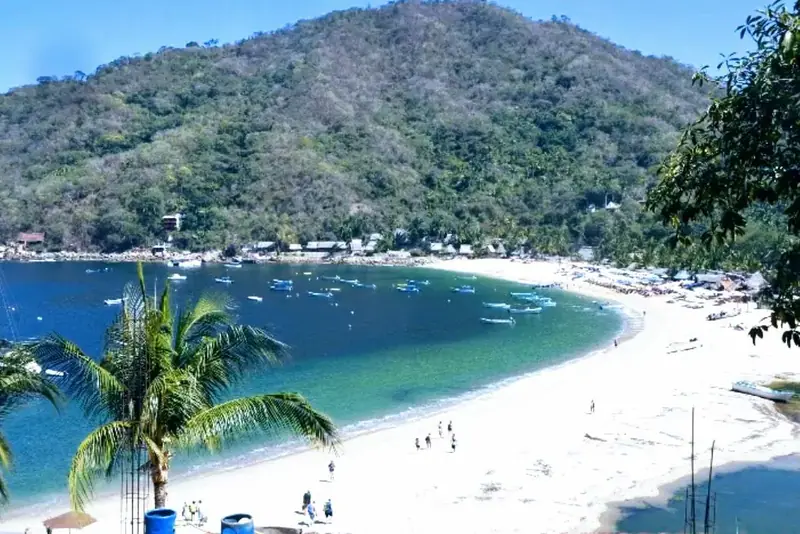
Most people swim off Yelapa's main beach, a sandy cove with gentle waves that Puerto Vallarta's tourism board calls ideal for swimming. For a quieter spot, walk to Playa Isabel, a small rocky cove near the point on the west side of the bay.
Here's what each spot is like, how warm the water gets, and where to check the tides.
Which beach in Yelapa is best for swimming?
The main beach, Playa Yelapa, is where most visitors spend the day. Visit Puerto Vallarta describes it as "gently lapped by emerald green waters with gentle waves," and lists swimming, snorkeling, and kayaking among the things to do there.
- Loungers and shade: palapa seafood restaurants line the sand. Their chairs and umbrellas come with ordering food or drinks, and you can always spread your own towel for free.
- Boats: water taxis and pangas land at the main beach, so swim away from where they come in. For boat options, see go2yelapa transport.
- Snacks: the pie ladies walk the beach selling coconut, banana, and lime pies.
- Kayaks: paddling along the coast is a lovely way to see the cove from the water.
Where is Playa Isabel in Yelapa?
Playa Isabel, as OpenStreetMap names it, is the small beach near the point on the west side of the cove. It's a little cove with rocky outcrops and a short stretch of sand, and few visitors make it over. One recent guide puts it about a 20-minute walk from the main beach and notes the path is easy to miss, so ask a local to point you to it.
What is the river mouth like in Yelapa?
The Río Tuito runs through the village and empties into the cove, splitting the beach side from the town side. Yelapa's name is often translated as "where two rivers meet the sea."
How you cross depends on the season:
- Dry season: the river is usually low, and depending on the water level you may be able to wade across.
- Rainy season, June to October: the river rises and runs faster. Use the pedestrian bridge between the beach and the village rather than wading, and save river swims for calmer days.
Our Yelapa map guide shows the beach, river, and bridges on one page.
How warm is the water in Yelapa?
The sea is warm all year. Average sea temperatures run from about 75°F (24°C) in February and March to about 87°F (31°C) in August and September.
| Months | Average sea temperature |
|---|---|
| December to March | About 75°F to 78°F (24°C to 26°C) |
| April and May | About 77°F to 82°F (25°C to 28°C) |
| June to November | About 82°F to 87°F (28°C to 31°C) |
When are the tides in Yelapa?
Puerto Vallarta's tide table usually shows two high tides and two low tides a day, and the range is modest, with the highest tides reaching about 1.3 to 1.4 meters (about 4.5 feet). Yelapa sits on the same bay, so a Puerto Vallarta table works well, such as Tide-Forecast.com's Puerto Vallarta tide times. For Mexico's own forecasts, UNAM's National Tide Gauge Service (Servicio Mareográfico Nacional) publishes tide forecasts for the country's coasts, working with the Mexican Navy (SEMAR).
A tide table helps most if you plan to explore the rocky edges of the cove or snorkel off the rocks near Playa Isabel.
Can you snorkel in Yelapa?
Yes. Snorkeling is one of the water sports Visit Puerto Vallarta lists for Yelapa's beach. Bring your own mask and snorkel to look around the rocks at either end of the cove. If you're staying with us, our host family can arrange a snorkeling trip by boat, quoted in your WhatsApp group. Our things to do in Yelapa guide has more ideas for time on the water.
How do you stay safe swimming in Yelapa?
A few easy habits keep a beach day relaxed:
- Shuffle your feet when you walk into shallow water. Stingrays can be in the shallows around Banderas Bay, and shuffling gives them warning so they move off before you step close.
- Watch the boats. Stay clear of where water taxis and pangas land and launch.
- Look before you swim. Watch the water for a few minutes, and keep an eye out for jellyfish. On Puerto Vallarta beaches, a purple flag warns that jellyfish may be nearby.
- Cover up. A long-sleeve rash guard, a wide-brimmed hat, and shade at midday go a long way under the Jalisco sun.
- Know where help is. Yelapa has a small medical clinic for basic care. Our health and safety guide has the details.
FAQ
Is Yelapa's beach good for swimming?
Yes. The main beach has gentle waves most days, and Visit Puerto Vallarta calls it ideal for swimming.
Are there stingrays in Yelapa?
Stingrays can turn up in the shallows around Banderas Bay. Shuffle your feet as you wade in so they have time to swim away.
Can you walk across the river in Yelapa?
Often, in the dry season, when the water is low. In the rainy season, June to October, the river runs higher, so use the pedestrian bridge.
How cold is the water in Yelapa in winter?
It's mild. Average sea temperatures stay around 75°F to 78°F (24°C to 26°C) from December to March.
Checked October 14, 2026. Details change, so confirm with the sources below before you go.
Sources
- Visit Puerto Vallarta, Yelapa beach page
- Where in the World Is Nina, guide to Yelapa, Mexico
- Beach.com, Yelapa, Mexico guide
- OpenStreetMap, Playa Isabel map feature
- SeaTemperatu.re, Yelapa sea temperature by month
- Tide-Forecast.com, Puerto Vallarta tide times
- Gaceta UNAM, the National Tide Gauge Service and sea-level monitoring
- Vallarta Adventures, swimmable beaches in Puerto Vallarta
More in our Yelapa visitor guide.
Plan your stay
Casa Gratitud sits on the hillside above the bay at the point, with three levels of terraces looking over the cove you'll swim in. See yelapacasagratitud.com for the house, or check rates and availability for a stay between October and April.